
Laguna Niguel, CA · Garage Door Service
Garage Door Repair for Laguna Niguel Homes
Laguna Niguel's 1980s-90s garage doors are hitting spring and roller fatigue at the same time. We diagnose and fix the failure, not just patch the symptom.
- Repairs & new doors
- Springs & openers
- Serving 5 nearby communities
Why This Fails Locally
Laguna Niguel's housing stock runs from 1938 to 2015, but the median build year is 1983, and most of the 14 named neighborhoods here filled in through the 1980s and 90s. That matters for one reason: torsion springs are rated for a number of open-close cycles, not a number of years, and a door installed in 1986 has been through four decades of daily use. The spring doesn't know it's 2024. It just reaches the end of its cycle count and breaks, usually on a Tuesday morning with the car still in the garage.
This isn't a weather problem. The climate here is mild temperate - no hard freezes to crack seals, no monsoon humidity to swell panels. What ages these doors is pure mechanical fatigue: galvanized torsion springs that have wound and unwound tens of thousands of times, nylon rollers worn oval instead of round, and tracks that have shifted a sixteenth of an inch a year until the door finally binds. In a newer subdivision you'd see fewer of these calls. Here, with so much of the stock from one narrow window of construction, a lot of doors are wearing out in the same few years.
Can You Do This Yourself
Lubricating hinges and rollers, tightening loose track brackets, and clearing the photo-eye sensors - you can do all of that yourself with a ladder and ten minutes. We'd rather you spend that money on something else.
What you shouldn't touch is the torsion spring itself. It's wound under enough tension to break a bone or worse if it lets go while you're working on it, and on a standard double door there are usually two springs sized to match the door's exact weight - guess wrong and you've got a door that slams down or won't stay open. If your door is from the 1980s or 90s stock common across Laguna Niguel, assume the spring has more cycles on it than it has years left, and don't be the one holding the bar when it goes. Cable work and anything involving the opener's drive gear falls in the same category. If the fix involves anything tensioned or electrical beyond swapping a remote battery, that's a call, not a weekend project.
How We Fix It
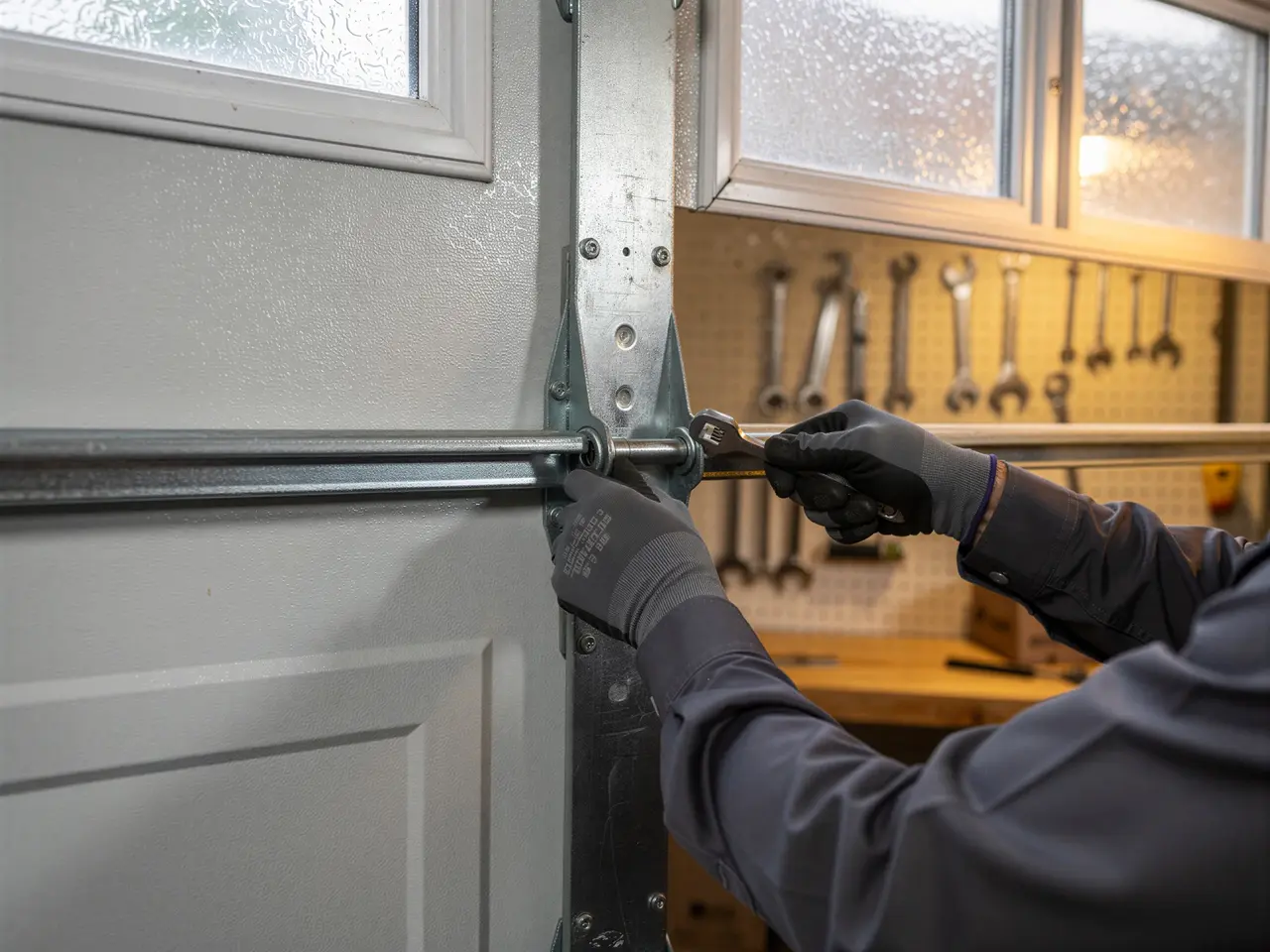
We start by matching the replacement spring to the door's actual weight and cycle demand, not just whatever was on it before - a lot of the original 1980s-era installs were undersized for the door even when new. For doors with worn galvanized tracks, we check alignment before anything else goes back on; a spring replaced against a misaligned track just fails again faster.
Rollers get swapped to sealed nylon rather than the steel or open-bearing rollers common in older installs, since they run quieter and don't need the same lubrication schedule. Cables get replaced alongside springs when they're original, since they wear on the same cycle count and a cable snapping under a new spring is a bad surprise. We test the opener's force settings last, because a door that's mechanically sound but set too aggressive will still slam or reverse.
How It Shows Up
The most common call is the loud bang - a torsion spring letting go, usually when the door is in the down position. After that, the door either won't open at all or needs a hard shove from the opener, which is the opener straining against a job it's not supposed to be doing alone.
Before a full break, you'll often hear it coming: a grinding or scraping sound as nylon rollers wear flat, a door that drifts crooked as one cable stretches more than the other, or a door that reverses halfway up for no clear reason. None of that is the opener's fault even though it's the opener doing the obvious part of the work. Given how much of Laguna Niguel's housing dates to the same construction window, these symptoms tend to cluster - a neighbor's call about a snapped spring is often a preview of what's coming for the house next door.
Frequently asked questions
Why did my garage door spring snap with no warning?
Torsion springs fail by cycle count, not age alone, and a lot of Laguna Niguel homes still have original springs from 1980s-90s construction. There's often no warning because the spring doesn't weaken gradually - it holds until it reaches its rated cycles, then breaks, sometimes mid-use.
Is it the mild climate causing my door problems?
Not directly. Laguna Niguel sits in a mild temperate band, so we don't see the freeze-thaw or humidity swings that cause seal and panel failures elsewhere. Most of what we fix here is mechanical wear - springs, rollers, cables - tied to how long the door's been cycling, not the weather.
Can I replace a torsion spring myself to save money?
We'd advise against it. A wound torsion spring holds enough stored tension to cause serious injury if it releases while you're working on it, and sizing it wrong leaves you with a door that slams or won't stay open. This is the one repair on the list we don't recommend as DIY.
My door is from the original 1980s build - is it worth repairing or replacing?
Depends on what's failing. A spring or roller swap on an otherwise sound door is usually worth it. If the track is badly bent or the panels themselves are rusted through, replacement can make more sense than chasing repairs on hardware from a decades-old install. We'll tell you which situation you're in before we start.
Related services
Related guides
By Neighborhood
Garage Door Repair across the Laguna Niguel area
We also handle garage door repair in these Laguna Niguel-area suburbs.
Book garage door service in Laguna Niguel
Call now or request a quote - tell us what the door is doing and where you are.